Culture, curiosity, your own pace
Punk Wellness Explained: China's TCM Drink Trend and Nine Traditional Tea Pairings
By Biohack.BaZi Editorial Team · Published · How we work
China's Gen Z is ordering herbal drinks at TCM bars. What punk wellness is, why it took off, and nine traditional tea pairings explained, with safety notes.
In a nutshell
What is punk wellness (朋克养生)?
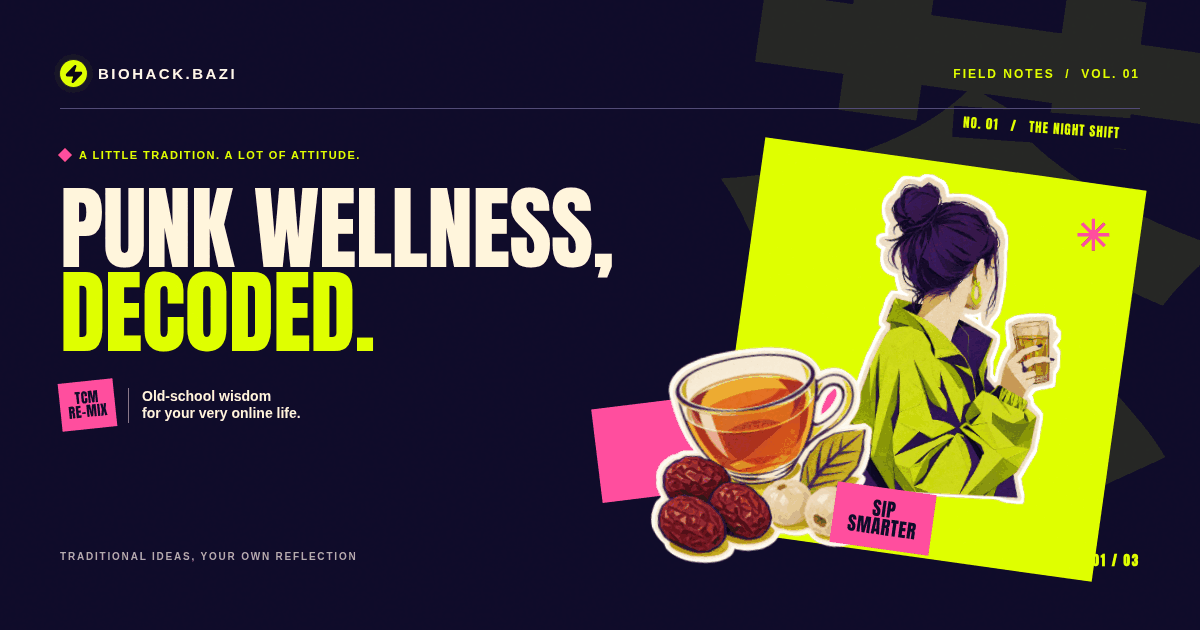
Punk wellness (朋克养生, péngkè yǎngshēng) is the Chinese slang for partying hard while also reaching for traditional wellbeing habits, such as goji berries in a late-night drink. In some Chinese cities, TCM bars now turn that contradiction into drinks matched to the customer, as reported by ITV News and the South China Morning Post.
That contradiction has made traditional food culture newly interesting to a generation looking for rituals with a little more personality.
A new city ritual
What is a TCM bar?
ITV News reported from Chengdu on 5 October 2026, visiting a bar where TCM practitioners checked customers' pulses and tongues and asked about daily habits before a drink was mixed. Its report describes ingredients such as goji berries, rose petals, lotus root, jujube and liquorice, alongside spirits or alcohol-free options. That is reporting about the venue, not a service this website provides.
SCMP's 2 April 2026 report describes the same wider cultural shift, including bars in Nanjing and Guangzhou. The appeal is part nightlife, part curiosity about traditional Chinese culture: familiar ingredients presented in an unexpected setting. A bar consultation and an online self-assessment are different experiences, and neither makes alcohol a health product.
The interesting question is not whether a late night can be cancelled out by a garnish. It is why younger adults want traditional vocabulary to feel relevant to their own routines. You can explore that vocabulary without alcohol, dramatic claims or a shelf full of unfamiliar ingredients.
Reporting describes bars in Chengdu, Nanjing and Guangzhou, consultations that may include pulse and tongue checks, and ingredients such as goji, jujube, liquorice, rose and lotus root.
The traditional frame
Why does TCM talk about matching?
In TCM theory, warming and cooling are traditional qualities used to discuss foods and people. They are not simply the temperature of a drink, and they do not establish a food's effect on your body. A steaming cup can contain ingredients traditionally described as cooling.
The nine constitution names offer another traditional way to describe tendencies. People can recognise more than one, and their routines can change. Our original 20-question self-assessment is an educational reflection tool, not a clinical instrument or a replacement for a qualified practitioner's assessment.
The tea list below is an editorial illustration of those ideas. It is not a suitability algorithm or evidence that your leading tendency requires a particular ingredient. Preference, allergies, medicines and professional advice matter more than matching a label.
The nine constitutions are cultural categories, not established medical facts or clinical findings. Read more about the nine constitution concepts.
Nine non-alcoholic ideas
What are the nine types and their tea ideas?
These pairings borrow from traditional food ideas as a way to explore culture and recipes. They are not personal health recommendations.
 01
Balanced
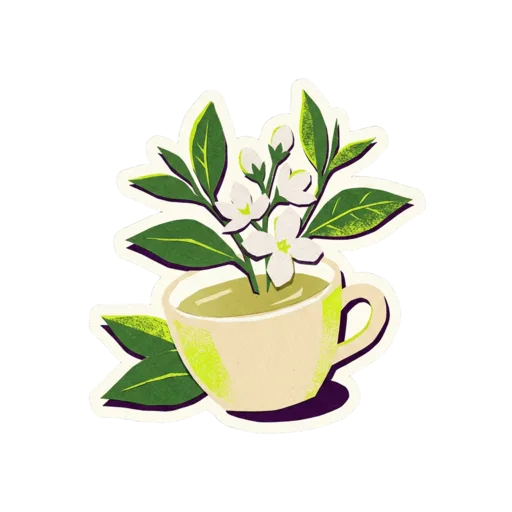
Jasmine green tea
A traditional description of relatively even, adaptable patterns.
In traditional TCM food culture, a light floral tea is an everyday pairing for the relatively even qualities described as balanced.
See the pairing and recipe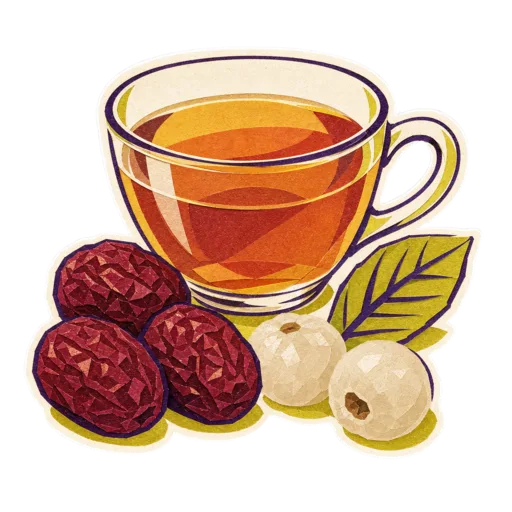 02
Qi deficiency
Red date and longan tea
A traditional pattern discussed through energy, effort and recovery.
Red dates and longan have a traditionally sweet, warming place in TCM food culture, which makes this an illustrative pairing for qi-deficiency vocabulary, not evidence of an energy effect.
See the pairing and recipe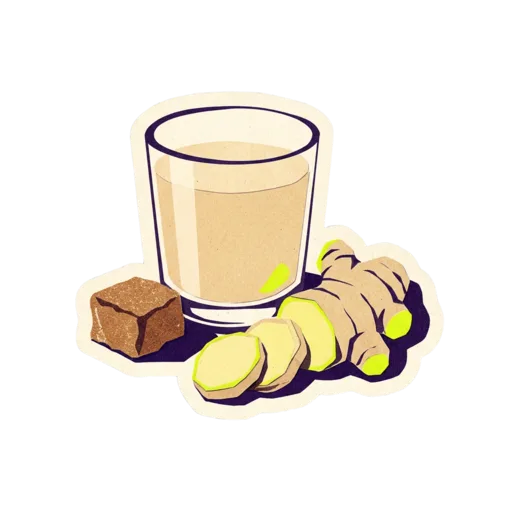 03
Yang deficiency
Ginger and brown sugar tea
A traditional pattern framed around warmth and activation.
Fresh ginger is described as warming in traditional TCM food theory, a conceptual link with the warmth-seeking language of yang deficiency.
See the pairing and recipe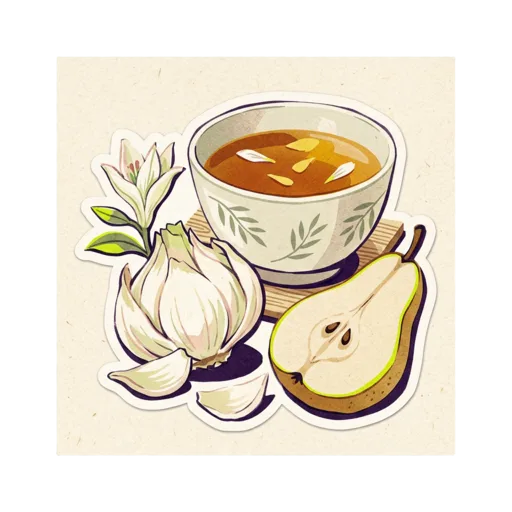 04
Yin deficiency
Lily bulb and pear tea
A traditional pattern discussed through replenishment and balance.
Pear and edible lily bulb appear in traditional food discussions of moistening qualities, an illustration of yin vocabulary rather than a promise about symptoms.
See the pairing and recipe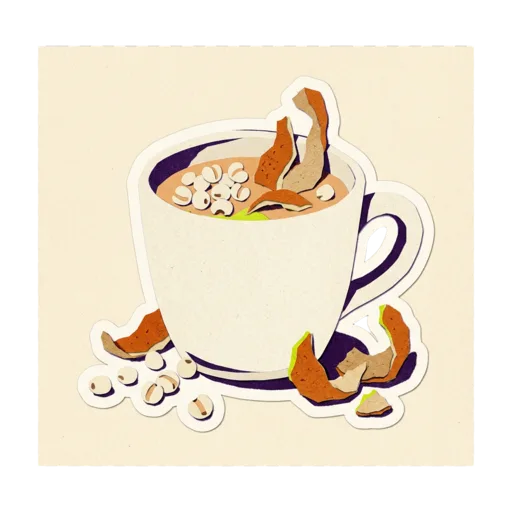 05
Phlegm-dampness
Coix seed and tangerine peel tea
A traditional model using images of heaviness and sluggish transformation.
Coix seed and dried tangerine peel are traditionally discussed through dampness and transformation. This pairing explains that framework; it does not remove anything from the body.
See the pairing and recipe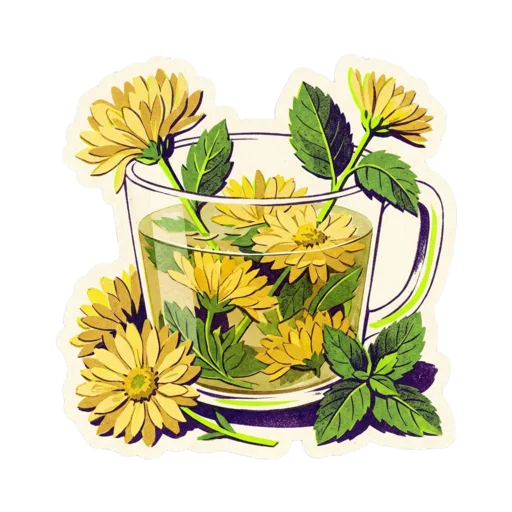 06
Damp-heat
Chrysanthemum and mint tea
A traditional pattern combining dampness and heat as conceptual qualities.
Chrysanthemum and mint have traditionally cooling associations in TCM food culture, a contrast with the conceptual heat in damp-heat descriptions.
See the pairing and recipe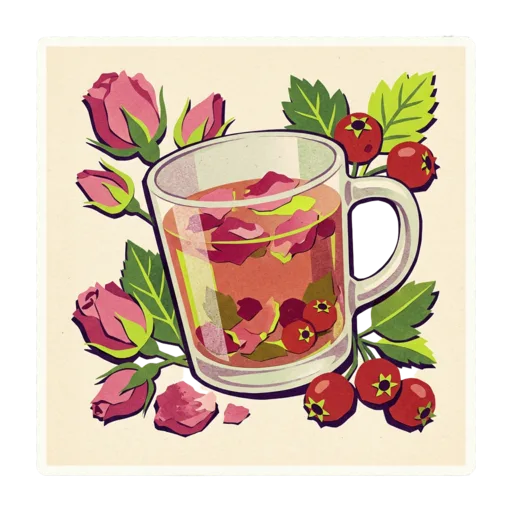 07
Blood stasis
Rose and hawthorn tea
A traditional description of constrained movement within its own model.
Rose and hawthorn feature in traditional discussions of movement. This is a cultural pairing for blood-stasis vocabulary, not a statement about circulation or clotting.
See the pairing and recipe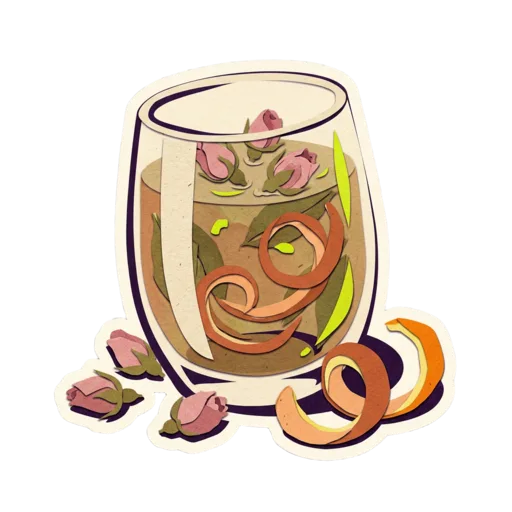 08
Qi stagnation
Rose and orange peel tea
A traditional pattern concerned with movement, expression and mood.
The floral and citrus aromas fit traditional descriptions of ease and movement, a sensory illustration of qi-stagnation language rather than a mental-health intervention.
See the pairing and recipe 09
Special diathesis
Plain warm water
A traditional category for distinctive individual sensitivities and features.
This traditional category highlights individual sensitivities, so simplicity comes first. The safest illustrative default is plain water, not a new herbal mixture.
See the pairing and recipeA little self-reflection
What can you explore across the nine types and tea pairings?
An original 20-question educational reflection to explore traditional categories.
Take the free testStraight answers
Frequently asked questions
What is punk wellness?
It is a cultural label for mixing indulgent habits with traditional wellbeing rituals, such as a late night followed by herbal tea. The contradiction is part of the joke, not evidence that the ritual cancels out the habit.
What is a TCM bar?
ITV News reported that a Chengdu venue asks customers about daily habits and checks their pulse and tongue before preparing a drink. The South China Morning Post reported on the TCM bar trend in Nanjing and Guangzhou.
Are TCM cocktails healthy?
Herbs do not make alcohol healthy or remove its risks. A culturally interesting cocktail is still an alcoholic drink. Our pairings are non-alcoholic food ideas, with ingredient cautions rather than health promises.
Which TCM tea suits my body type?
TCM theory discusses warming, cooling and constitution tendencies, but a quiz cannot establish which ingredient is suitable for you. Use the free self-assessment to explore the vocabulary, then check allergies, medicines and professional advice before trying a pairing.
Can I make TCM drinks at home?
You can try simple non-alcoholic drinks using familiar food-grade ingredients if they are suitable for you. Keep food portions modest, follow the cautions, avoid concentrated extracts and choose plain water whenever uncertain.
Read the reporting
Sources
- ITV News: reporting from Chengdu, 5 October 2026
- SCMP: reporting on China's TCM bar trend, 2 April 2026
- NCCIH: medicine and supplement interactions
- NCCIH: ginger safety
- NCCIH: hawthorn safety
For cultural education and self-reflection only, not medical advice. Traditional descriptions are not established facts about your health. These food pairings cannot establish your constitution or ingredient suitability. Consult a qualified practitioner or clinician about your health, and do not change medicines or delay care because of a quiz or tea pairing.