Food, tradition & everyday care
He Suye in The Best Thing (爱你): TCM Food Therapy Explained
By Biohack.BaZi Editorial Team · Published · How we work
Enjoy the story, and let your curiosity lead. We’ll explore the food traditions together, with practical notes to help you ask thoughtful questions about your own wellbeing.
The short answer
Is the food therapy in The Best Thing real TCM advice?
The Best Thing (爱你) is a 2025 romance featuring He Suye (何苏叶), a fictional TCM practitioner played by Zhang Linghe (张凌赫).
Its food-therapy theme invites a useful question: how do familiar ingredients fit traditional Chinese medicine food properties?
Our verdict: the emphasis on the person is consistent with traditional theory, but a fictional food example is neither clinical evidence nor a universal eating plan.
Who is He Suye in The Best Thing?
He Suye (何苏叶) is the fictional TCM practitioner played by Zhang Linghe (张凌赫) in the 2025 Chinese drama The Best Thing (爱你). He is known in the story for food-based care for hotel manager Shen Xifan, played by Xu Ruohan.
- Chinese title
- 爱你
- Year
- 2025
- Platform
- iQIYI
- Episodes
- 28 (iQIYI catalogue)
- Based on
- Sheng Li's novel 爱你是我做过最好的事
- Lead cast
- Zhang Linghe, Xu Ruohan
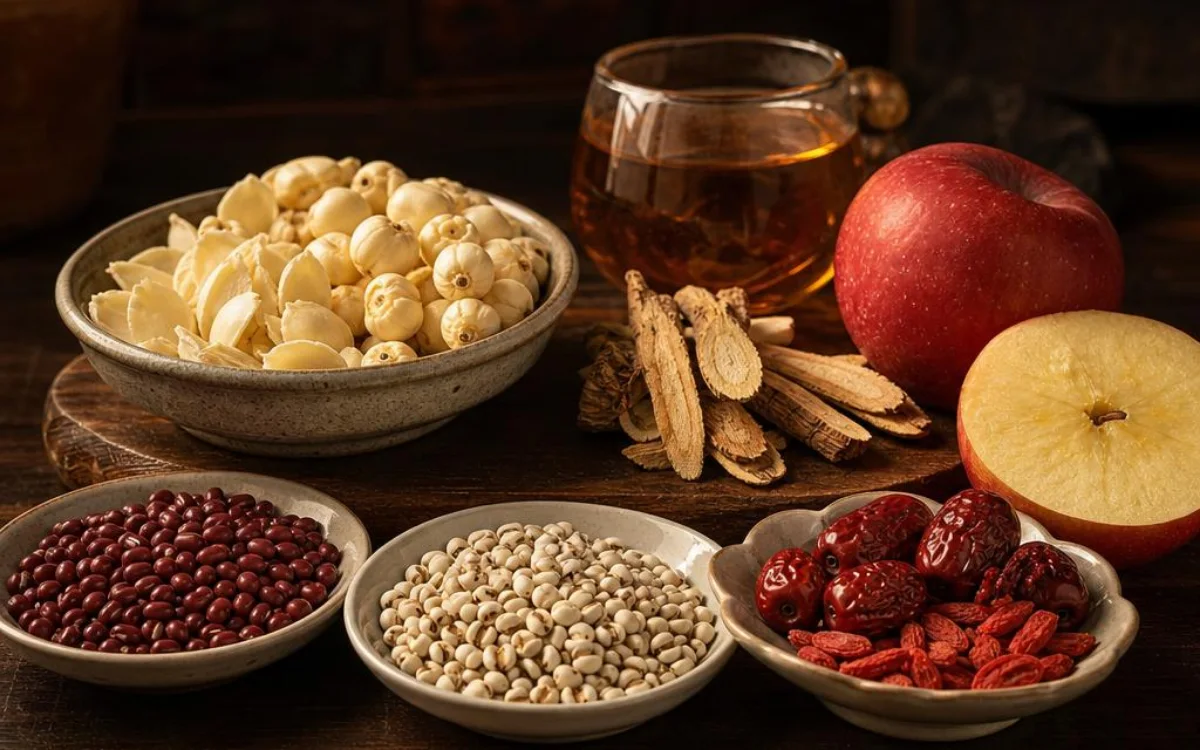
Series context
What is the series background?
Below, we use familiar ingredients as our own kitchen examples to explore the drama’s food-therapy theme. Think of them as starting points for learning and conversation, rather than an episode-by-episode recipe guide.
Sources: Her World: the drama’s TCM scenes and food themes · iQIYI: 28 episodes, novel adaptation and viewing information · Wikipedia: novel title, author and series background
View the series on iQIYICurious about your own patterns? Start here.
A reflective tool
Take the free TCM constitution test
Answer 20 original questions to explore nine traditional constitution tendencies. Free self-reflection, not a clinical assessment.
Read the background: the nine TCM constitution concepts and the Five Elements explained.
Start your reflectionA separate framework
Try the free BaZi calculator
Discover your Four Pillars and Five Elements as a separate cultural learning exercise. Your chart does not determine your TCM constitution.
Explore BaZiTradition and storytelling
What does The Best Thing get right about TCM food therapy?
The traditional phrase 药食同源 describes overlap between the food cupboard and the materia medica. Kitchen ingredients are not interchangeable with clinical preparations. This is cultural context, not proof of a medical outcome.
Matching food to the person is another recognisable idea. Traditional descriptions consider nature, flavour and associations alongside the individual, not one best ingredient for everyone. Storytelling can communicate attentiveness without explaining the assessment behind it.
Storytelling compresses time and complexity. One ingredient rarely represents the whole of professional care, and an appealing scene cannot tell viewers about interactions, pregnancy considerations or the cause of persistent symptoms. Enjoying the romance and checking health claims are compatible responses.
We therefore separate three layers throughout this review: fictional portrayal, traditional vocabulary and responsible conclusions about medical effects. The first is narrative; the second belongs to a historical framework; the third requires evidence about the actual preparation, person and outcome. None automatically proves the next.
At a glance
TCM food properties: a comparison, not a shopping prescription
| Ingredient | Traditional nature and flavour | Traditional association | Practical limit |
|---|---|---|---|
| Lily bulb / fox nut | Sweet, slightly cold / sweet, astringent, neutral | Heart and Lung / Spleen and Kidney | Food-grade ingredients; cooling may not suit every preference |
| Licorice root | Sweet, neutral | Raw: heat vocabulary and harmonising; honey-fried: Spleen support | Not a routine daily drink; important health and medicine cautions |
| Coix with red beans | Coix: sweet, bland, cool | Traditional dampness vocabulary | Coix is traditionally avoided in pregnancy; bean identity matters |
| Red date / goji | Sweet, warm / sweet, neutral | Qi and Blood / Liver and Kidney; eyes | Warming descriptions are not measurements; goji may interact with warfarin |
| Apple | No traditional property assigned here | A gentle aroma example only | No claim about sleep or another health outcome |
Ingredient notes
How do traditional TCM ideas describe the foods?
These notes describe traditional food properties and simple kitchen preparations. They do not establish clinical effects or replace individual advice.
01 / 05
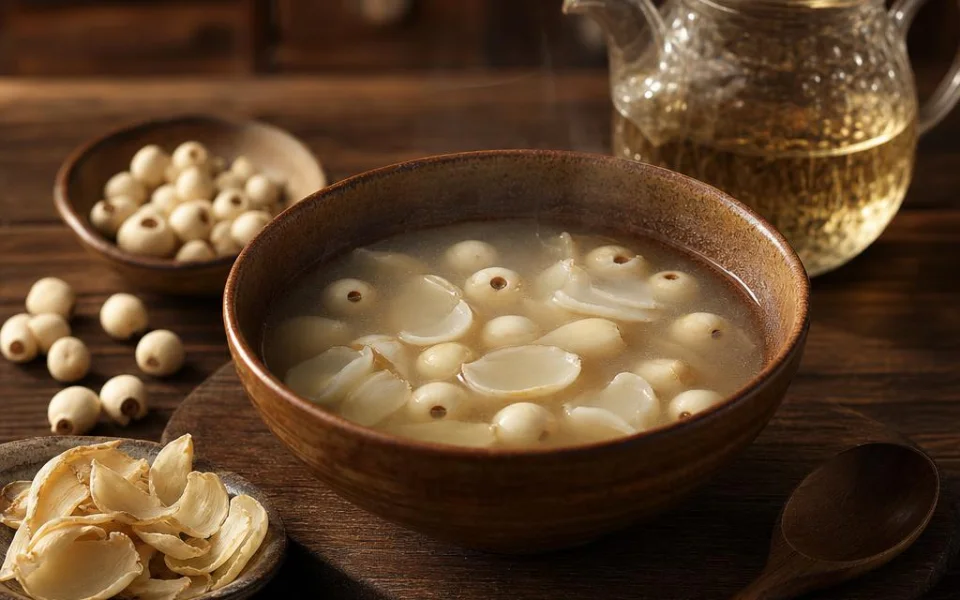
Lily bulb and fox nut: calm imagery, careful interpretation
Lily bulb and fox nuts offer a simple way to begin learning about traditional food properties. The kitchen example below is ours, made for sharing and exploring the ingredients at your own pace.
Traditional organ associations do not demonstrate anatomical changes. Likewise, a calming description is not evidence of a sleep effect.
Traditional properties
Lily bulb (百合): sweet and slightly cold, associated with Heart and Lung, and traditionally described as calming. Fox nut (芡实): sweet, astringent and neutral, associated with Spleen and Kidney.
Traditional suitability
In TCM discussion, the pairing may arise when considering gentler foods and cooling qualities. That does not establish who should eat it. Cold-prone people may prefer to go easy on cooling ingredients; ordinary tolerance and professional guidance matter more than a television association.
A simple shared bowl
Ingredients
- 30 g food-grade dried lily bulb
- 20 g dried fox nuts
- Water according to the ingredient packet
Method
- Rinse both ingredients. Soak in the refrigerator if the packet requires soaking, then discard that water.
- Cook the fox nuts in fresh water until thoroughly soft, following the packet. Add the lily bulb and simmer until tender.
- Serve as a small shared side dish. These are cooking quantities for two, not a health dosage.
02 / 05
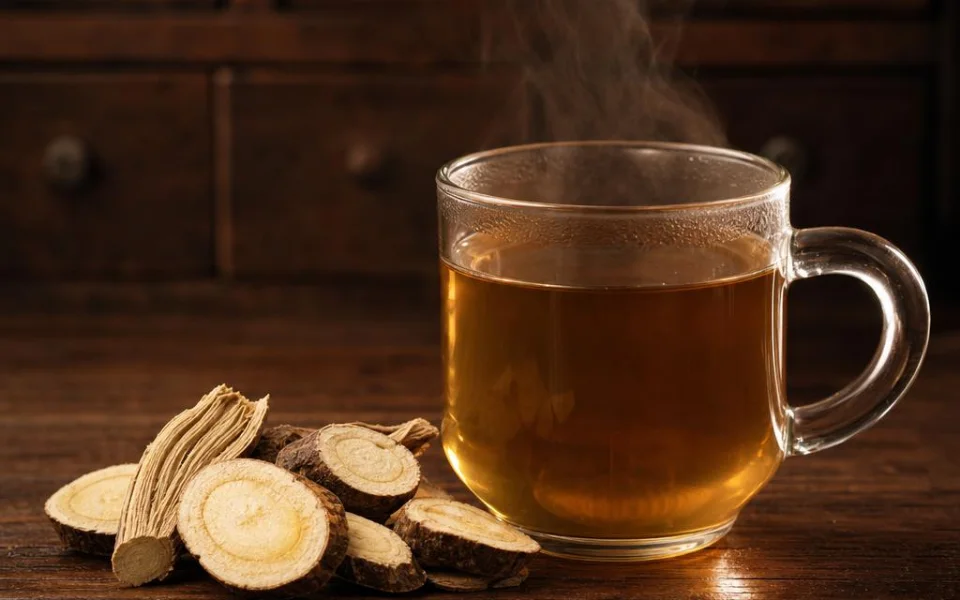
Licorice root tea: sweetness is not a safety guarantee
Licorice deserves a pause. Sweetness does not make repeated use harmless. NCCIH describes potentially serious glycyrrhizin effects, particularly with prolonged use and certain health conditions.
Processing does not remove the need for safety assessment. A fictional character cannot establish a suitable preparation, amount or frequency.
Traditional properties
Licorice (甘草) is sweet and neutral in traditional descriptions. Raw licorice (生甘草) is traditionally used in heat-related descriptions and for harmonising; honey-fried licorice (炙甘草) is associated with supporting the Spleen.
Traditional suitability
These descriptions explain traditional use, not suitability for an individual. A qualified professional should assess the actual product, relevant medicines and personal circumstances before oral licorice use.
A deliberately licorice-free warm cup
Ingredients
- One mug of warm water
- A few fresh apple slices, optional
Method
- Wash an apple and add a few freshly cut slices to a mug.
- Pour in comfortably warm water and enjoy for flavour only.
This is an original culinary alternative, not licorice tea or an equivalent preparation. We deliberately omit a licorice-root recipe because suitability cannot be established here.
03 / 05
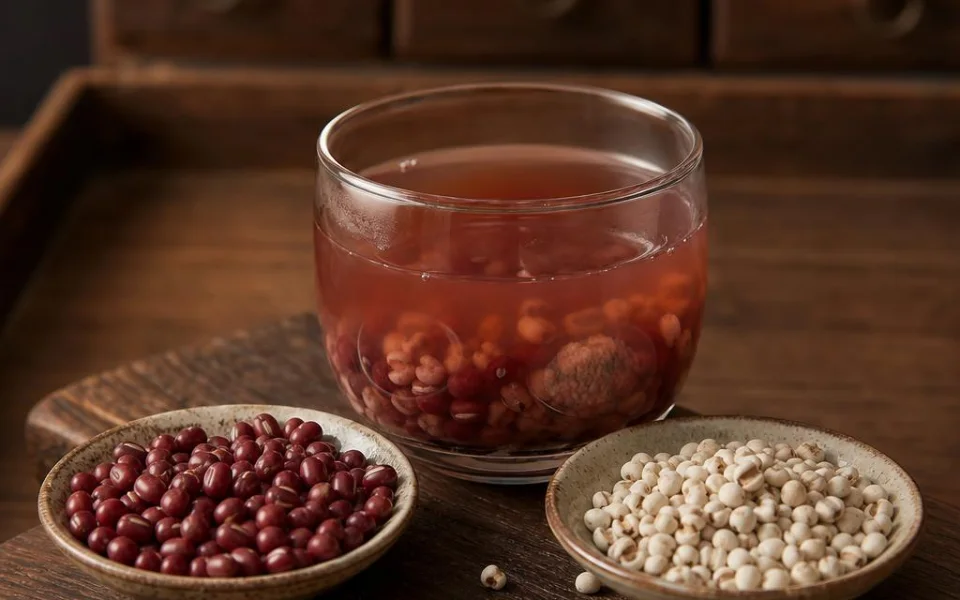
Red bean and coix seed: identifying what is actually in the bowl
Dampness is a traditional concept, not something a food photograph can establish about a person. Red bean and coix belong in that vocabulary, not in a self-selected daily regimen.
The classic bean here is 赤小豆, often replaced at home by 红豆. Labels vary; substitution does not establish identical properties. Coix is not ordinary pearl barley.
Traditional properties
Coix seed (薏米) is sweet, bland and cool in TCM theory, traditionally associated with dampness. We make no additional property claim for the substituted household bean.
Traditional suitability
Some traditional discussions consider this pairing in dampness-related contexts. That is not a reason to identify yourself with the pattern or use it daily. Cooling foods may not fit every person's preferences or circumstances.
Red-bean and coix kitchen soup
Ingredients
- 50 g food-grade red beans
- 20 g food-grade coix
- Fresh water as directed on the packets
Method
- Check ingredient labels. If soaking is needed, soak in the refrigerator and discard the soaking water.
- Cook in fresh water until the beans and grains are fully soft, following packet instructions.
- Serve two modest bowls as food, not as a course intended to change a health condition.
04 / 05
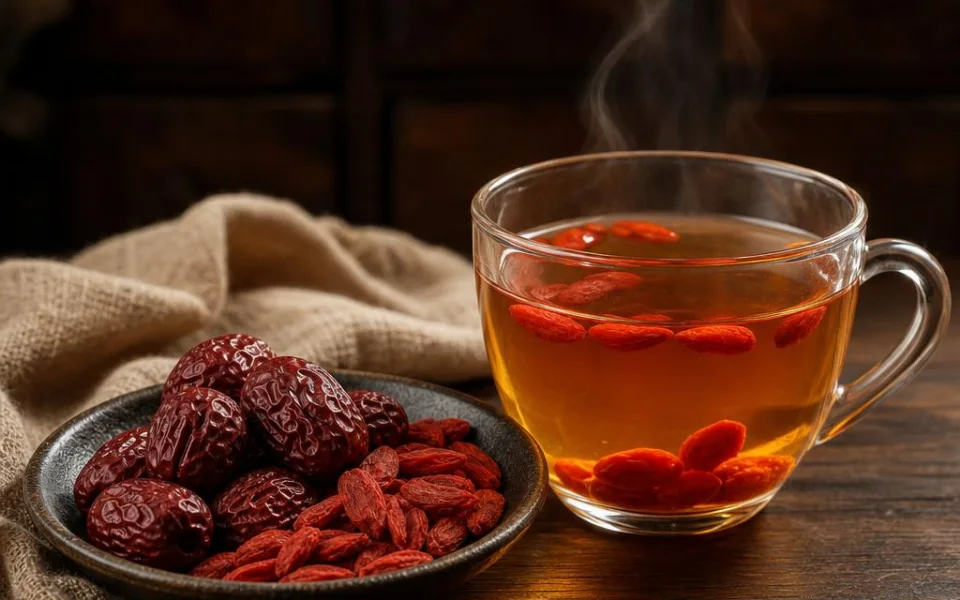
Red date and goji: familiar foods, real interaction questions
Enjoying flavour is different from expecting an organ-specific effect. Traditional references to Blood or the eyes are not findings about blood tests or eyesight.
Published case reports describe potential goji interaction with warfarin. They cannot establish risk for every serving, but justify asking a pharmacist or clinician rather than assuming food status removes concern.
Traditional properties
Red date (红枣) is sweet and warm, traditionally associated with Qi and Blood. Goji (枸杞) is sweet and neutral, associated with Liver and Kidney and traditionally linked to the eyes.
Traditional suitability
Traditional warming descriptions may make red date less appealing for someone described as heat-prone. Those labels alone do not establish suitability. Personal preferences, actual symptoms and medication advice remain distinct questions.
A lightly sweet fruit bowl
Ingredients
- Four pitted red dates
- One teaspoon of dried goji, only if appropriate for you
- Enough water for two small bowls
Method
- Wash the fruit and remove any remaining date stones.
- Simmer the dates in water until soft. If appropriate for you, add the goji near the end.
- Serve without adding a health claim. These amounts describe a shared culinary portion, not a daily recommendation.
05 / 05
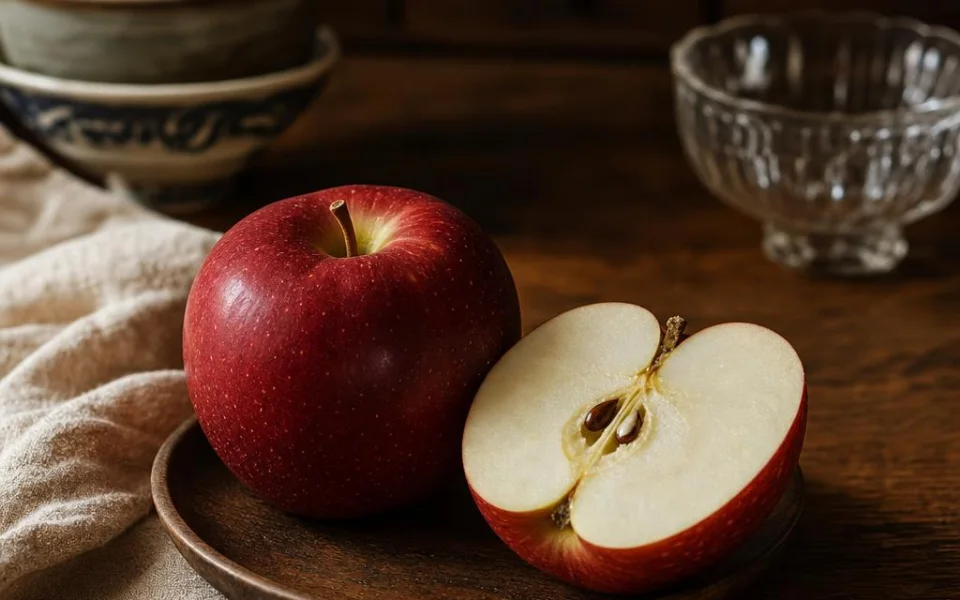
The bedside apple: an aroma example, not a sleep claim
A familiar apple scent can be a pleasant detail in a room. Here, we look at it as an aroma to enjoy, without assuming a benefit for sleep. Good rest can have many influences, and persistent difficulties deserve professional attention.
Do not leave cut fruit out overnight for atmosphere. The following preparation is an ordinary snack, not a health intervention.
Traditional properties
No traditional nature, flavour or organ association is assigned to apple in this review.
Traditional suitability
Consider only whether you enjoy the aroma or fruit and can eat it comfortably. Persistent sleep difficulties deserve professional attention, not a fruit-based explanation.
A fresh apple plate
Ingredients
- One washed eating apple
Method
- Cut into manageable slices shortly before eating.
- Serve fresh; refrigerate leftovers promptly and discard spoiled fruit.
What other TCM moments appear in The Best Thing?
Shenmen and Tanzhong: learning the names
Her World’s coverage highlights Shenmen (神门), at the inner wrist crease on the little-finger side, and Tanzhong (膻中), at the centre of the chest. In traditional language, Shenmen is associated with the Heart meridian and emotional awareness; Tanzhong is discussed in relation to chest Qi. These are descriptions of location and traditional association, not pressing instructions or promises about sleep.
Mugwort and moxibustion: warmth with professional care
Mugwort (艾草) appears in Her World’s discussion of the drama. Moxibustion (艾灸) is a traditional warming practice using burning moxa near selected points. China Daily also includes it in the skills Zhang Linghe explored for the role. Heat can cause burns, as documented in published safety reports. Moxibustion should be performed by a qualified practitioner, not attempted from a television scene.
Sources: Her World: the drama’s TCM scenes and food themes · China Daily, 7 March 2025: Zhang Linghe’s preparation for He Suye · Safety of moxibustion: a systematic review of case reports
Chinese yam: an ordinary bowl of porridge
Her World includes Chinese yam (山药) among the foods discussed around the drama. In Hong Kong Baptist University’s traditional reference, it is described as sweet and neutral, with Spleen, Lung and Kidney associations. These are traditional categories, not claims about organ function. Our original porridge below is a shared kitchen idea, not a personalised food plan.
Simple Chinese yam porridge
Ingredients
- 50 g rice
- 150 g fresh food-grade Chinese yam
- About 750 ml water, adjusted for texture
Method
- Rinse the rice. Peel and dice the yam; use gloves if its raw juices irritate your skin.
- Simmer the rice and yam in fresh water until both are fully cooked and soft, stirring and adding water as needed.
- Share as two small portions. Cool leftovers promptly and refrigerate. Consider allergies and personal dietary needs.
Sources: Her World: the drama’s TCM scenes and food themes · Hong Kong Baptist University: Chinese yam, traditional properties
Acupuncture, tuina and pulse-taking
China Daily’s March 2025 report describes acupuncture, tuina and pulse-taking among the skills involved in portraying He Suye. Watching a character at work can invite curiosity, but these practices belong with qualified, registered practitioners. In Singapore, look for a TCMPB-registered practitioner with a valid Practising Certificate. The Board provides the official registration requirements.
Sources: China Daily, 7 March 2025: Zhang Linghe’s preparation for He Suye · TCMPB: registration and a valid Practising Certificate in Singapore
Behind the scenes with Zhang Linghe
Zhang Linghe spent about a month learning TCM for the role, according to China Daily’s 7 March 2025 report, and described his knowledge as superficial. That preparation helps explain the attention to gestures in He Suye’s portrayal. It is acting preparation, not a professional qualification or a personal recommendation from the actor.
Sources: China Daily, 7 March 2025: Zhang Linghe’s preparation for He Suye
Context matters
Why does one food idea not suit everyone?
Warming and cooling are traditional categories, not serving temperatures or laboratory measurements. A steaming bowl can contain a cool-described ingredient. The vocabulary cannot establish what a stranger needs.
The nine TCM constitution concepts offer another vocabulary for discussing tendencies. They are not nine permanent identities, and one sensation or favourite dish cannot settle a category. A qualified assessment is different from an online reflection.
Our original questionnaire asks twenty plain-language questions. It is educational, is not the official CCMQ and has not been clinically validated. Results are tendencies for self-reflection, not proof that any ingredient above is suitable.
Curious about your own patterns after watching The Best Thing? Start with the free TCM constitution self-assessment to organise your observations. If Four Pillars and Five Elements interest you, explore the BaZi calculator separately. Neither tool selects foods for you.
An important distinction
TCM constitution and BaZi Five Elements are different tools
The drama shows food therapy depends on the person. Explore that distinction before exploring a tool: a constitution questionnaire uses your answers, while a BaZi chart calculates Four Pillars and element distributions from birth information.
Shared Five Elements language does not make the two equivalent. A BaZi chart cannot determine a medically recognised TCM constitution, reveal organ function or choose a food plan. Use these tools for learning, not in place of professional care.
Straight answers
Frequently asked questions
Is there a Chinese drama called The Best Thing?
Yes. The Best Thing (爱你) is a 2025 Chinese drama listed in iQIYI's catalogue.
Sources: iQIYI: 28 episodes, novel adaptation and viewing information
Who plays He Suye in The Best Thing?
Zhang Linghe (张凌赫) plays He Suye (何苏叶), a fictional TCM practitioner. Xu Ruohan (徐若晗) plays hotel manager Shen Xifan (沈惜凡).
Sources: iQIYI: 28 episodes, novel adaptation and viewing information · Wikipedia: novel title, author and series background
What tea does He Suye make in The Best Thing?
Licorice root tea, also called gancao shui (甘草水), is the drink discussed in Her World’s coverage of He Suye. In traditional food and herb vocabulary, licorice is described as sweet and neutral. That description does not establish personal suitability. Enjoy learning about the scene, but read the licorice safety notes before considering the ingredient for yourself.
Sources: Her World: the drama’s TCM scenes and food themes · NCCIH: Licorice Root, safety and evidence
Why does He Suye keep an apple by the bed?
The bedside apple is presented as an aroma ritual in the drama, as described by Her World. A familiar scent can be part of a character’s evening atmosphere, but this does not establish that apples improve sleep. Our kitchen example treats an apple as ordinary food. Keep cut fruit refrigerated, and seek professional advice for persistent sleep difficulties.
Is licorice root tea safe to drink every day?
No, it should not be assumed safe for long-term daily use. NCCIH warns that glycyrrhizin in licorice can cause serious adverse effects, particularly with high blood pressure, low potassium, heart or kidney conditions, or pregnancy. Traditional use does not remove these risks. Ask a qualified healthcare professional about the actual product, medicines and your circumstances rather than copying a character’s routine.
What TCM herbs and foods appear in The Best Thing?
Her World’s coverage discusses licorice root, apples, mugwort and Chinese yam. Our five food notes also explore lily bulb, fox nuts, coix, red beans, red dates and goji as editorial kitchen examples. Those examples are not a verified scene-by-scene inventory. Traditional associations offer cultural context, rather than evidence that a particular food will benefit every viewer.
Did Zhang Linghe learn TCM for The Best Thing?
Yes. China Daily’s March 2025 report says Zhang Linghe spent about a month learning TCM for the role, including some acupuncture, moxibustion, tuina and pulse-taking. He described his understanding as superficial. This was preparation for playing He Suye: Zhang Linghe is an actor, not a TCM practitioner, and screen performance is not a source of personal health guidance.
Sources: China Daily, 7 March 2025: Zhang Linghe’s preparation for He Suye
Is The Best Thing based on a novel?
Yes. It adapts Sheng Li’s novel 爱你,是我做过最好的事, rendered in English as Loving You Is the Best Thing I've Ever Done. English wording varies: iQIYI uses Loving You is the Best Thing I Have Done, while Wikipedia uses another literal translation. The Chinese title and author identify the same original work behind the drama.
Sources: iQIYI: 28 episodes, novel adaptation and viewing information · Wikipedia: novel title, author and series background
How many episodes does The Best Thing have, and where can I watch it?
The Best Thing has 28 episodes, according to iQIYI’s official listing and Wikipedia. You can check the official iQIYI series page for viewing options, subtitles and access in your region. Availability and membership requirements may vary. We use the platform’s 28-episode count rather than the conflicting count in Her World’s food-themed article.
Sources: iQIYI: 28 episodes, novel adaptation and viewing information · Wikipedia: novel title, author and series background
Is Biohack.BaZi connected to The Best Thing or its cast?
No. Biohack.BaZi has no partnership, endorsement or sponsorship relationship with The Best Thing, its broadcaster or cast. This article is written by our Editorial Team to explore the drama’s food and TCM themes. Our food images are AI-generated. Personal health questions belong with a qualified practitioner, while our free tools offer educational self-reflection.
References
- iQIYI: official series catalogue and premise
- Series background and cast: supporting reference
- 19 February 2025: Jiangsu TV scheduling announcement report
- NCCIH: Licorice Root, safety and evidence
- PubMed: possible goji and warfarin interaction, case report
- China Daily: Zhang Linghe, He Suye and the drama's TCM themes
- Her World: the drama’s TCM scenes and food themes
- China Daily, 7 March 2025: Zhang Linghe’s preparation for He Suye
- Hong Kong Baptist University: Chinese yam, traditional properties
- TCMPB: registration and a valid Practising Certificate in Singapore
- Safety of moxibustion: a systematic review of case reports